
Why did Australia grant asylum to five Iranian women footballers during Asian Cup amid ‘traitor’ accusations back home?
Simran Guleria | Mar 11, 2026, 06:27 IST
Five members of Iran’s women’s football team have received humanitarian visas in Australia after refusing to sing the national anthem during the Asian Cup, a move that sparked ‘traitor’ accusations and fears they could face punishment if they returned to Tehran.

Silence on a football pitch has rarely carried such serious consequences. When several members of Iran’s women’s national football team refused to sing their country’s anthem during an international tournament in Australia, the gesture quickly turned into a political flashpoint. Within days, a group of the players found themselves seeking protection abroad, fearing punishment if they returned home.
At least five members of Iran’s women’s football squad have now been granted humanitarian visas by the Australian government after competing in the Asian Cup. Authorities in Canberra confirmed the decision earlier this week, acknowledging concerns that the athletes could face retaliation or persecution if they returned to Iran. The development followed reports that several members of the 13-player travelling squad had sought asylum after the tournament.
![X| @TheIranWatcher| Australia shelters Iranian women footballers after row]()
Australia’s immigration minister, Tony Burke, said the women were moved to a secure location once their situation became clear. He added that the government had informed other members of the team that they too could remain in Australia if they felt unsafe returning to Iran. The move reflects Australia’s humanitarian visa programme, which offers protection to individuals who face credible threats in their home countries and allows them to live, study and work in Australia.
Reports from ABC News suggest that more than five players initially sought protection, highlighting the level of concern among members of the squad following the controversy surrounding their actions during the tournament.
The controversy began before Iran’s opening match against South Korea in the Asian Cup hosted in Australia. During the pre-match ceremony, several players chose to remain silent rather than sing the national anthem of the Islamic Republic.
The act drew immediate attention and sparked strong reactions within Iran. A presenter on Iranian state television, Mohammad Reza Shahbazi, publicly criticised the team and labelled the players “wartime traitors”. In a video that circulated widely on social media, he argued that the footballers should face severe consequences for what he described as dishonourable and unpatriotic behaviour.
The remarks intensified concerns among the athletes and observers who feared the players could face punishment upon returning home. In Iran, athletes who make political gestures or statements perceived as critical of the state have occasionally faced disciplinary action, travel restrictions, or exclusion from national teams.
Against this tense backdrop, Australia’s decision to offer humanitarian protection has provided the players with an immediate sense of security. Authorities reportedly ensured the athletes were relocated from their hotel to a safe environment while their immigration status was assessed.
The situation has also drawn attention beyond the football field. Reports indicate that demonstrations took place near the Iranian team’s transport in Australia after news of the asylum claims emerged, underscoring the broader political sensitivities surrounding the issue.
![X| @Tony_Burke| Iranian footballers receive asylum after anthem protest]()
For the players involved, the choice to remain in Australia represents more than a career decision. It reflects a moment where sport intersected with politics, identity and personal safety. What began as a silent gesture before a football match has now reshaped the futures of several members of Iran’s national team, placing them at the centre of an international conversation about protest, protection and the power of sport.
At least five members of Iran’s women’s football squad have now been granted humanitarian visas by the Australian government after competing in the Asian Cup. Authorities in Canberra confirmed the decision earlier this week, acknowledging concerns that the athletes could face retaliation or persecution if they returned to Iran. The development followed reports that several members of the 13-player travelling squad had sought asylum after the tournament.
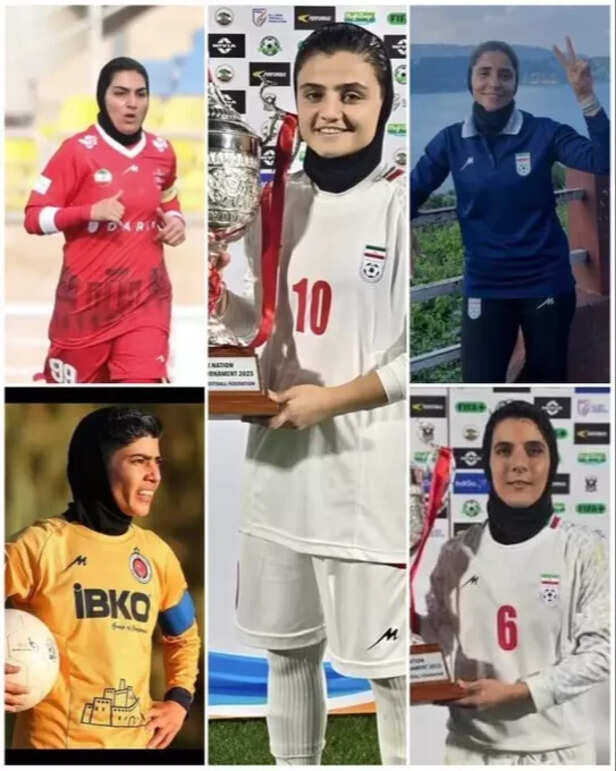
Image credit : X| @TheIranWatcher| Australia shelters Iranian women footballers after row
Australia’s immigration minister, Tony Burke, said the women were moved to a secure location once their situation became clear. He added that the government had informed other members of the team that they too could remain in Australia if they felt unsafe returning to Iran. The move reflects Australia’s humanitarian visa programme, which offers protection to individuals who face credible threats in their home countries and allows them to live, study and work in Australia.
Avustralya'da turnuvada olan İranlı kadın futbolculardan sadece 7'si İran korumalarının elinden kaçarak Avustralya'ya iltica etmeyi başardı.
Ancak kadronun geri kalanı, bu zor durum sırasında ailelerinin yanında olmak için İran'a dönmeyi tercih etti ve Avustralya yetkilileri… pic.twitter.com/BiO0ZU3lfF
— RUSEN || Press (@RusenPress) March 11, 2026
Anthem protest sparks outrage
The controversy began before Iran’s opening match against South Korea in the Asian Cup hosted in Australia. During the pre-match ceremony, several players chose to remain silent rather than sing the national anthem of the Islamic Republic.
The Iranian women’s national football team REFUSES to sing the Islamic regime’s anthem.
During the 12 day war, athletes sang the anthem and did a military salute.
Soon a different salute.🖕
And by then, they won’t have to wear hijabs.
F R E E D O M.
pic.twitter.com/iKz7IRxmvg
— dahlia kurtz ✡︎ דליה קורץ (@DahliaKurtz) March 2, 2026
The remarks intensified concerns among the athletes and observers who feared the players could face punishment upon returning home. In Iran, athletes who make political gestures or statements perceived as critical of the state have occasionally faced disciplinary action, travel restrictions, or exclusion from national teams.
Safe haven in Australia
Against this tense backdrop, Australia’s decision to offer humanitarian protection has provided the players with an immediate sense of security. Authorities reportedly ensured the athletes were relocated from their hotel to a safe environment while their immigration status was assessed.
The situation has also drawn attention beyond the football field. Reports indicate that demonstrations took place near the Iranian team’s transport in Australia after news of the asylum claims emerged, underscoring the broader political sensitivities surrounding the issue.
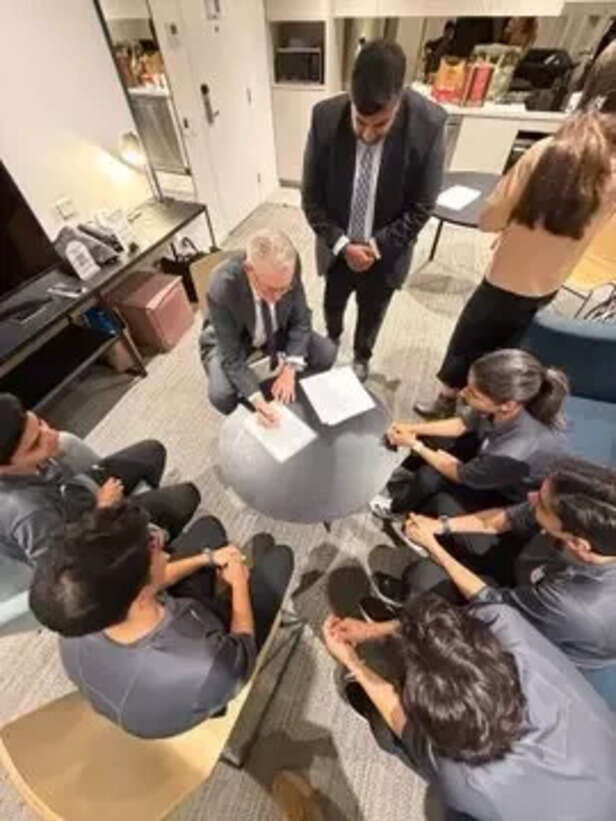
Image credit : X| @Tony_Burke| Iranian footballers receive asylum after anthem protest
For the players involved, the choice to remain in Australia represents more than a career decision. It reflects a moment where sport intersected with politics, identity and personal safety. What began as a silent gesture before a football match has now reshaped the futures of several members of Iran’s national team, placing them at the centre of an international conversation about protest, protection and the power of sport.
Who are banned from the Oscars in 2026?
By Nillohit Bagchi

Why are the Academy Awards called the Oscars?
By Priya Prakash

Is Kanye West’s India concert cancelled?
By Nillohit Bagchi

Which actors can win their first Oscar in 2026?
By Nillohit Bagchi

Teacher warns parents over BTS ARIRANG class bunk plans
By Karen Noronha

Legendary directors still waiting for an Oscar
By Karen Noronha

Trump warns US will hit Iran ‘Very Hard’ next week
By Nancy Jaiswal
